

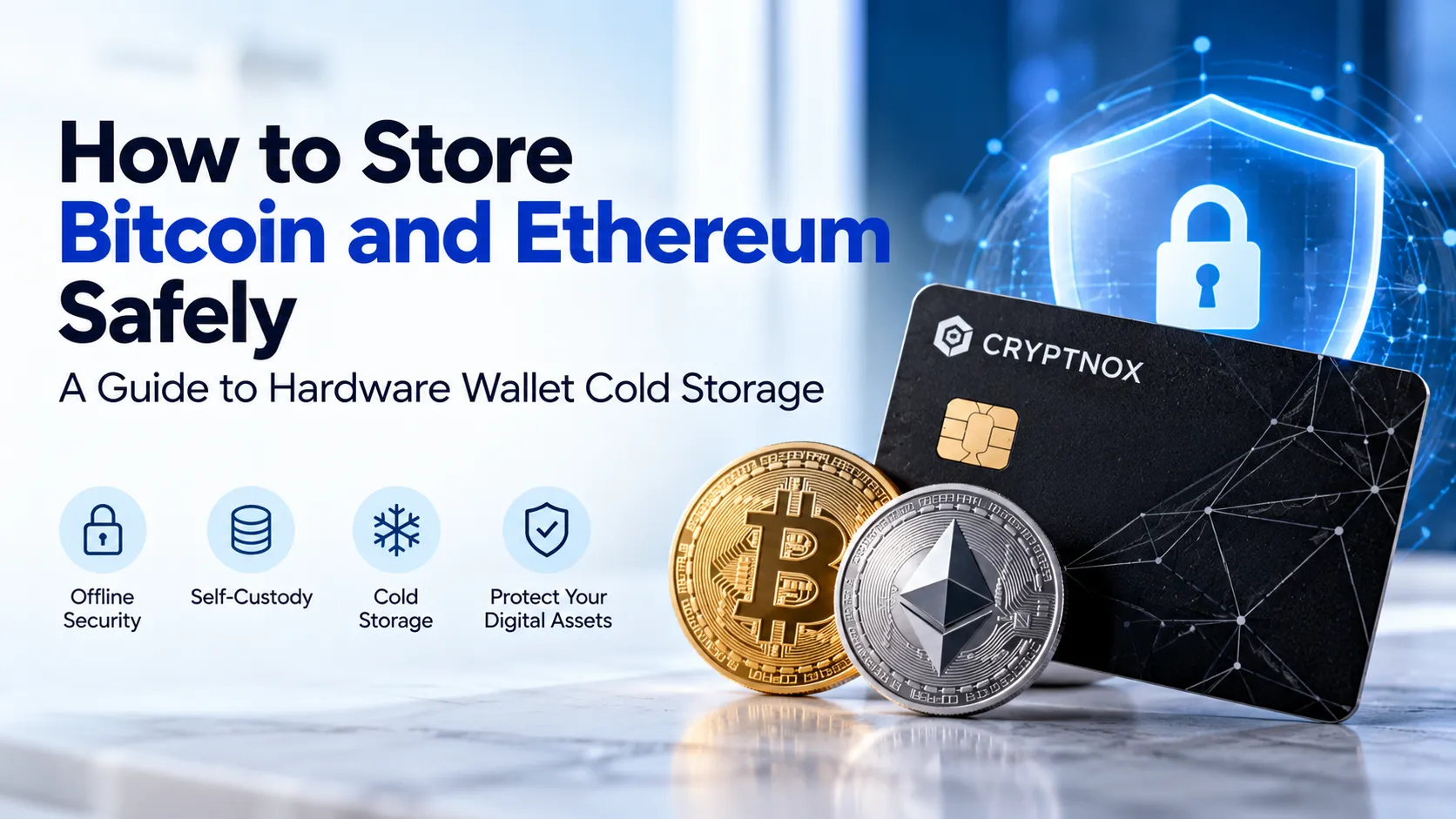
Bitcoin and Ethereum are valuable digital assets, but keeping them secure requires more than choosing a strong password or using a reputable exchange. Bitcoin cold storage provides a way to protect cryptocurrency by keeping the private keys needed to authorize transactions offline, reducing their exposure to internet-based attacks.
For individuals, long-term investors, and businesses managing digital assets, a hardware wallet can provide a practical approach to self-custody. Instead of leaving private keys on an internet-connected device, a dedicated security device keeps sensitive key operations isolated from everyday computing environments.
However, cold storage is not automatically risk-free. Recovery phrases, physical access, transaction verification, and backup procedures all influence the security of a wallet. Understanding these elements helps users establish a reliable approach to Bitcoin and Ethereum storage without unnecessarily complicating their security practices.
What Is Bitcoin Cold Storage?
Bitcoin cold storage is a method of protecting cryptocurrency private keys by keeping them offline or isolated from internet-connected environments. The Bitcoin itself remains recorded on the blockchain; the wallet stores or protects the cryptographic credentials required to authorize transactions.
A private key proves control over the relevant funds. Anyone who obtains the necessary private key or recovery credentials may be able to transfer the associated assets. This makes private-key protection central to cryptocurrency security.
A hardware wallet is one way to implement cold storage. Depending on its design, it generates or stores private keys in a dedicated device and signs transactions without exposing those keys directly to a connected computer or smartphone.
For users comparing physical wallet formats, a hardware wallet designed as a smart card offers a compact alternative to conventional standalone devices. The specific security properties depend on the product’s architecture, implementation, and supported cryptocurrency networks.
How Does Hardware Wallet Cold Storage Work?
A hardware wallet separates transaction authorization from the general-purpose device used to access cryptocurrency applications.
The process generally follows these steps:
-
Key generation: The wallet generates private keys using a secure process.
-
Address creation: Public keys or derived addresses allow users to receive cryptocurrency without disclosing their private keys.
-
Transaction preparation: A wallet application prepares a transaction when the user wants to transfer funds.
-
Transaction signing: The hardware wallet authorizes the transaction using the relevant private key.
-
Broadcasting: The signed transaction is transmitted to the appropriate blockchain network through a connected application or other supported mechanism.
The important distinction is that signing a transaction does not require revealing the private key to the application broadcasting it.
A device may connect to a computer or smartphone during use and still protect its private keys internally. Therefore, cold storage should be understood in terms of key isolation and transaction-signing architecture rather than simply whether a device ever connects to another device.
Bitcoin Cold Storage vs. Ethereum Cold Storage
Bitcoin and Ethereum use different blockchain architectures, so users must ensure that their storage method supports the assets and networks they intend to manage.
Bitcoin cold storage
Bitcoin transactions are authorized using private keys associated with Bitcoin addresses and transaction outputs. A suitable wallet must support the relevant address formats, transaction types, and signing procedures.
For long-term holders, the main priorities include protecting private keys, verifying receiving addresses, and maintaining a secure recovery process.
Ethereum cold storage
Ethereum cold storage follows the same fundamental principle of protecting private keys, but Ethereum transactions involve account-based balances, transaction nonces, gas fees, and potentially smart-contract interactions.
Users should verify transaction details carefully, especially when interacting with decentralized applications or approving token transfers. A transaction may authorize more than a straightforward transfer of ETH, depending on the smart contract and permissions involved.
Before choosing a wallet, confirm that it supports the specific assets, networks, and transaction types you need. Support for Bitcoin does not automatically mean a device supports Ethereum, and support for ETH does not guarantee compatibility with every Ethereum-based token or network.
How to Set Up Cryptocurrency Cold Storage Safely
A secure setup involves more than purchasing a wallet. The surrounding procedures are equally important.
1. Obtain the wallet from a trusted source
Purchase through an authorized or otherwise verifiable source. Check product authenticity, follow the manufacturer’s setup instructions, and avoid devices that appear to have been previously configured.
Never use a recovery phrase supplied by an unknown seller or included in unsolicited instructions.
2. Generate and protect recovery credentials
Follow the device’s documented recovery process. If it generates a recovery phrase, record it using the recommended method and store it somewhere physically secure.
Never photograph or upload recovery credentials to cloud storage, email, messaging applications, or online documents. Anyone who obtains the phrase may be able to recover the wallet independently of the physical device.
Some wallet architectures use different recovery mechanisms, so do not assume that every hardware wallet uses a standard recovery phrase.
3. Verify transactions before signing
Check the recipient address, amount, network, and relevant transaction details using the wallet’s supported verification method.
For Ethereum smart-contract interactions, review the permissions being requested. Blindly approving a transaction can expose funds even when the private key itself remains secure.
4. Test recovery and backup procedures
Understand how recovery works before transferring substantial funds. Follow the manufacturer’s guidance for testing backups without exposing secret credentials or risking the existing wallet.
A recovery plan should also account for device loss, physical damage, and the possibility that the original user becomes unavailable.
Common Cold Storage Mistakes to Avoid
Even a well-designed wallet cannot compensate for unsafe operating practices. Common mistakes include:
-
Sharing recovery phrases with support agents or other people.
-
Storing backup credentials in an internet-connected account.
-
Failing to verify transaction details before signing.
-
Assuming that every token or blockchain network is supported.
-
Keeping the only recovery backup in a location vulnerable to theft, fire, or water damage.
-
Ignoring firmware updates and security guidance from the manufacturer.
-
Confusing possession of a wallet device with guaranteed control over funds when recovery credentials have been compromised.
Users managing significant holdings should also consider inheritance, organizational access policies, and procedures for recovering assets if a device is lost.
Choosing a Self-Custody Hardware Wallet
A self-custody hardware wallet should be evaluated according to its security architecture, supported assets, recovery process, usability, and compatibility with the applications you intend to use.
Smart-card-based designs offer a compact physical form factor. Cryptnox, for example, offers a smart-card hardware wallet intended for managing supported digital assets. Before selecting any device, verify its current specifications, supported networks, setup requirements, and documented security features.
The right choice depends on your threat model. A long-term investor may prioritize secure backups and infrequent access, while an active user may place greater emphasis on transaction verification and application compatibility.
Conclusion
Bitcoin cold storage helps reduce the risk of online theft by protecting the private keys used to authorize cryptocurrency transactions. Ethereum cold storage applies the same principle but also requires attention to network compatibility, smart-contract permissions, and transaction details.
A hardware wallet can strengthen self-custody by isolating sensitive key operations from everyday devices, but security also depends on recovery credentials, physical protection, and careful transaction verification.
Before storing significant amounts of Bitcoin or Ethereum, confirm that your chosen wallet supports the assets you hold, understand its recovery procedure, and establish secure backup practices. Treat recovery credentials as highly sensitive secrets, and never approve transactions you do not understand. With the right combination of technology and disciplined procedures, cryptocurrency cold storage can form an important part of a long-term digital asset security strategy.